https://sunstone.org/wp-content/uploads/sbi/articles/115-6-98-112.pdf
How can we act responsibly toward discomfitting Church experiences?
Necessary, though uneasy, alliances exist between institutions and individuals. The underlying tension is fundamental:
A central purpose of mortality is to allow individual growth through the exercise of free agency. A central purpose of institutions generally is to maintain themselves with a minimum of disorder. Individual free agency, in its purest _form, implies the existence of unlimited choice. institutions, on the other hand, require a certain level of conformity in order to preserve their identity.
With this introduction, the B. H, Roberts Society, an independent Salt Lake City group devoted to “examining and discussing all aspects of the restored gospel as they relate to contemporary society,” announced its series of lectures to explore the benefits and costs the relationship between the institutional Church and the individual.
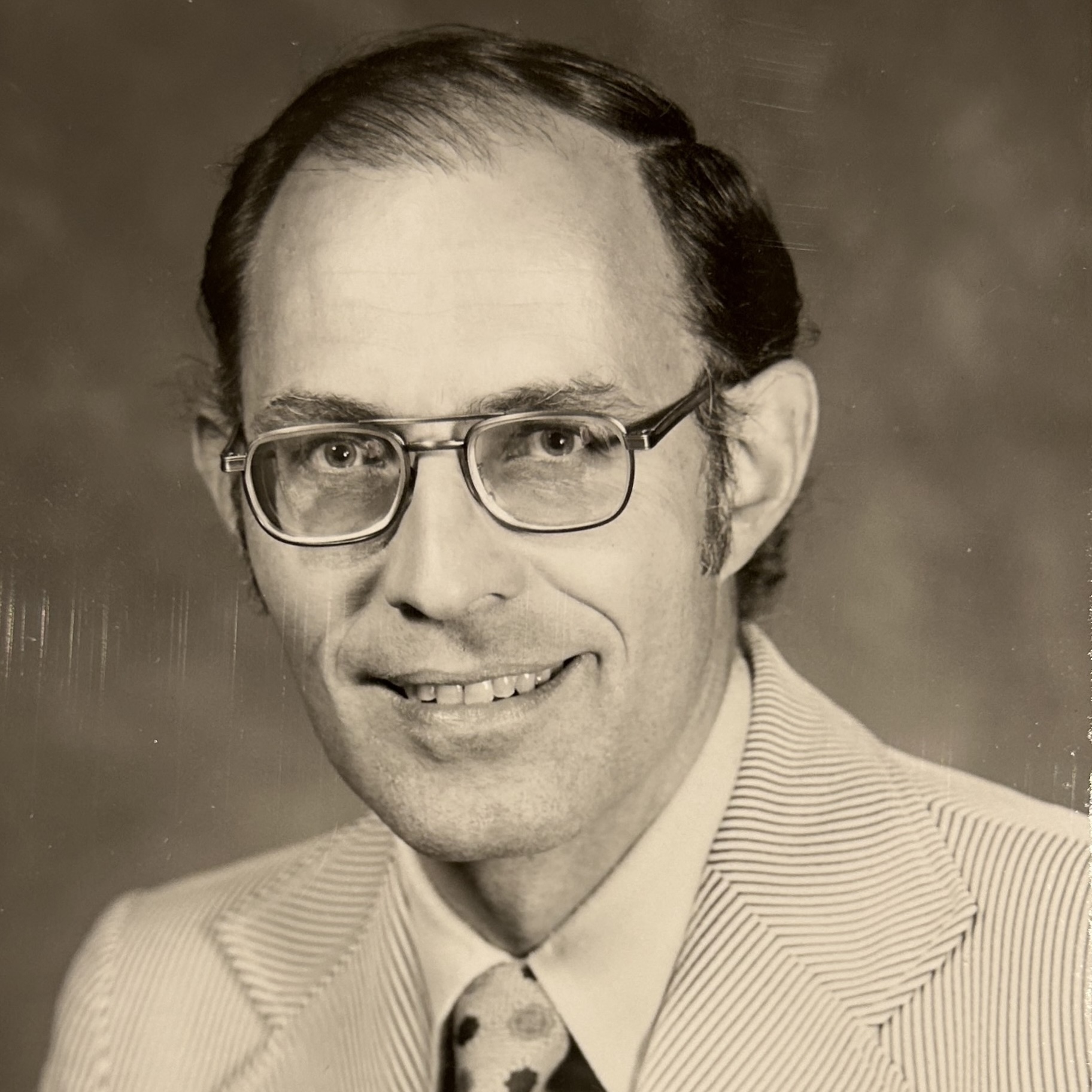
The series’ first lecture was delivered on 12 March 1981 by J. Bonner Ritchie. Professor Ritchie’s presentation was informal, lively, personal—and timely. To preserve the tone, the transcript of his speech has been only lightly edited.
TWENTY YEARS AGO, I WAS SERVING IN GERMANY as a young second lieutenant in the Army. In the middle of the night, as often happened, I received a telephone call to go pick up a couple of soldiers in my platoon who were drunk and in trouble. One had been hit by a train, and the other was not terribly rational. As I took them to the dispensary, I was intrigued and frightened by the comment of the uninjured one, “He’s probably better off dead than being a soldier in the Fiftieth Ordnance Company” As a new platoon leader in that organization, 1 wondered what my role was going to be. How could 1 cope with that environment? How could 1 change that attitude? I think I can trace my beginning as a behavioral scientist to the reflections of that night. I began the process of making a long-term professional commitment—it has been reinforced over the years by many other events, some humorous and some more poignant—that I was going to dedicate my life to trying to help people protect themselves from organizational abuse. I didn’t know exactly how I was going to do it, what academic or professional route to follow. Besides [ had another three years’ commitment to the Army, plenty of time to formulate career goals.
Another military experience: One morning, 1 told a young private what to do, and he said, “Hell, no, Lt. Ritchie. I’m not going to do that. ” I started thinking about organizations a little further. Now I was really wondering. I had a piece of paper signed by General Dwight Eisenhower saying I was an officer and that people would do what [ said. A few did, and 1 thought it was magic and everybody would obey. Then one day, an individual did not.
I didn’t know quite what I was going to do when [ got out of the Army, but I ended up back in graduate school at Berkeley during the 1960s, trying to understand what universities were doing to students and what students were doing to universities. As chairman of a doctoral student organization at Berkeley during the Free Speech Movement, I had an interesting perspective on what people sometimes force organizations to do to them. Then I was caught up in civil rights activities. Driving between West Point and Tupelo, Mississippi, one day with a group of black people who were trying to organize a catfish farm, we were trailed by a pickup truck with no license plate. The person sitting in the right hand seat had a shot gun that he began firing. I was reminded that organizations like the KKK sometimes provide an excuse for people to behave in ways that they might not behave in full public review. With those shots ringing out, I started to think about how you help a group of black farmers trying to make a living, but receiving only a third the return of white farmers producing the same product.
I suggest one more explanation for my perspectives—the family I grew up in. I distinctly recall the night when I was a young teenager that my mother either kept me up or stayed up with me—I’m not sure which—most of the night, debating whether or not God’s omniscience, foreknowledge, and perfect information took away individual freedom. 1 can remember that debate vividly. It started about eight o’clock at night. I remember the defiant stand I took. As my mother went through a series of arguments, I think she felt that she was teaching me a very final truth. What she was in fact. doing was teaching me a process in which questioning is important, in which debate is useful and fun. A process in which having a different opinion is not a reason to reject but a reason to discuss. A process that demands rigor, that demands inquiry, that makes one uncomfortable with anything but carefully developed, even if sometimes defiant and rebellious, positions on any series of issues.
My father, on the other hand, was a very peaceful, easygoing, pleasant individual. I recall his behavior as a priesthood quorum advisor, where he put incredible effort into loving and helping people. He did not flaunt or neglect organizational procedures but rather placed in a secondary position sanctions, policies, and tenets of a theological system in favor of loving a group of boys, of which I was one. I have observed my dad as a bishop, a stake president, and in a temple presidency, but never have I learned a more important lesson than when 1 saw him, as my deacon’s quorum advisor, make people more important than organizations.
From that background, I arrived at a crusade of great importance to me. While I do not feel we can make organizations safe for people, I think we can help people protect themselves from organizational abuse. By doing so, we can free people to develop their creative potential using the organization as a resource, rather than as a limiting force. I would hope that we can make our organizations (especially the Church) more effective tools for noble purposes. This is especially important in a contemporary world where we so often see a dichotomy between a self-indulgent, narcissistic approach to organizations, on the one hand, and the noble dream of the idealist on the other. The individual and the organization are not inevitably pitted against each other, but there is always the high probability of a negative effect which must be guarded against. It is the latter point I would like to explore further,
If I were a better behavioral scientist, I would give a talk tonight on the messages 1 have received from all those who knew I was speaking. I’ve had enough prescriptions about what I should do that if I followed my normal pattern, which is to resist all such advice, I would have nothing left to say. I would have been preempted by people who told me that 1 should give a very careful and rigorous theological talk, because some are a little suspicious of my theological interpretations. Some told me E should give a very professional organizational theory talk in order to establish academic credibility. Others told me I should provide a historical trace of individual-church conflicts. Others said 1 should deal with purely contemporary conflicts in the institutional-individual battleground_ Some said my only purpose should be to suggest a set of practical future strategies, it is interesting to compare those who said that I should present an objective, detached, academic value point of view with others who said that I should relate my own personal feelings.
Read the remainder at Sunstone.